The Encore Is a Custom, Not a Requirement
The encore custom can make a concert ending feel awkward. Learn how applause, an extra piece and a planned close can work without a fixed script.
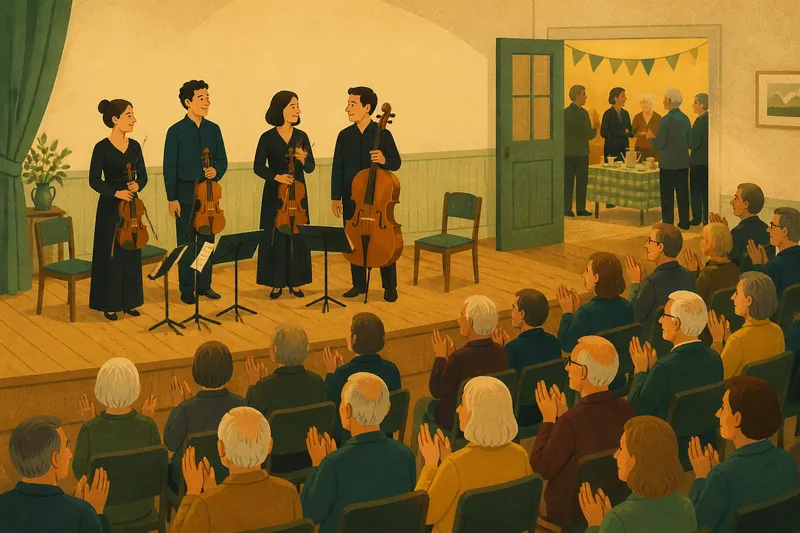
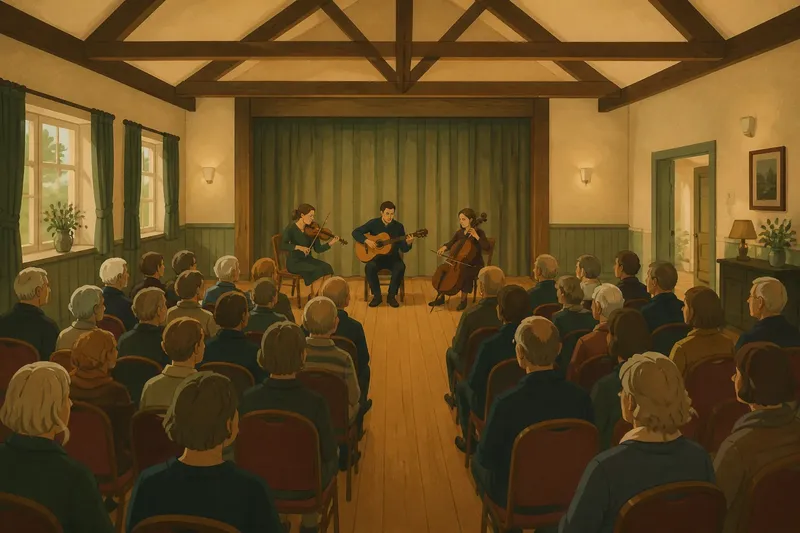
The encore custom gets awkward when the last chord has faded, the players have put down their instruments, and the audience is unsure whether to clap, stand or wait. At a village hall concert, that pause can feel especially exposed: there is no curtain to close, and the musicians may be only a few steps from the front row. An encore is one possible response to applause, not a debt the performers must repay.
Imagine a clearly hypothetical evening in a parish hall. The organisers have booked a small string group for a mixed programme, and the musicians want the printed final piece to be the genuine end. Their challenge is not to control the audience. It is to make the ending understandable, while leaving room for a spontaneous extra if the players decide one suits the night.
What does an encore ask of the audience?
An encore is an additional performance after the programme appears to have ended. The word can carry a sense of “again”, but concert customs vary: a group might repeat a short favourite, play something new, or simply return to acknowledge applause. None of those actions is automatic.
Applause has several meanings at once. It thanks the musicians, recognises a particular performance and gives listeners a way to share their response. It does not have to function as a coded demand for another piece. Nor does a quiet audience necessarily mean that it disliked the concert; people may be listening closely, unsure of local habits or waiting for a clear cue.
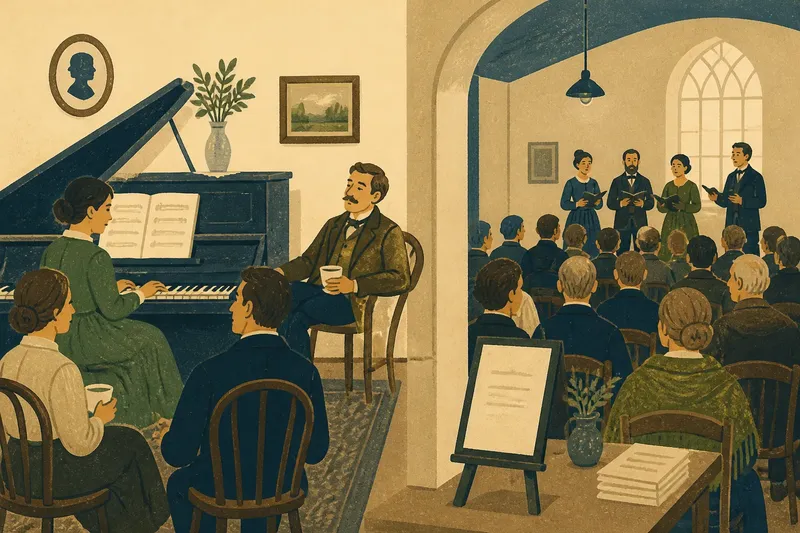
That distinction matters in a small rural venue. The room may be used for meetings or dances as well as music, so listeners arrive with different expectations. Some may know the convention of clapping until the performers return. Others may think the final bow has already closed the evening. Neither group needs correcting.
How can the ending become clear?
For the imagined hall concert, the group and organiser agree on a simple arrangement before doors open. The programme gives the last work a clear place at the end, and the spoken welcome says that the musicians will finish with it. That wording prepares listeners without promising an encore or discouraging applause.
After the final piece, the players remain together for a moment, acknowledge the room and leave the performing area at an unhurried pace. The organiser does not rush to announce refreshments over the clapping. If the group has chosen a firm close, the musicians can make that choice visible through their actions; if they want to return, they can do so without pretending the audience has issued an order.
A short spoken line can help when the setting is informal. For example, the organiser might thank the players and point listeners towards tea in the adjoining room. That gives the evening a clear next action without treating continued applause as a problem.
What can the musicians decide before the concert?
The musicians should decide whether an additional piece is genuinely available, rather than leaving the question until they are tired, packing up or trying to read the room under pressure. Their decision can account for the character of the programme, the condition of their voices or instruments, and the practical end of the booking.
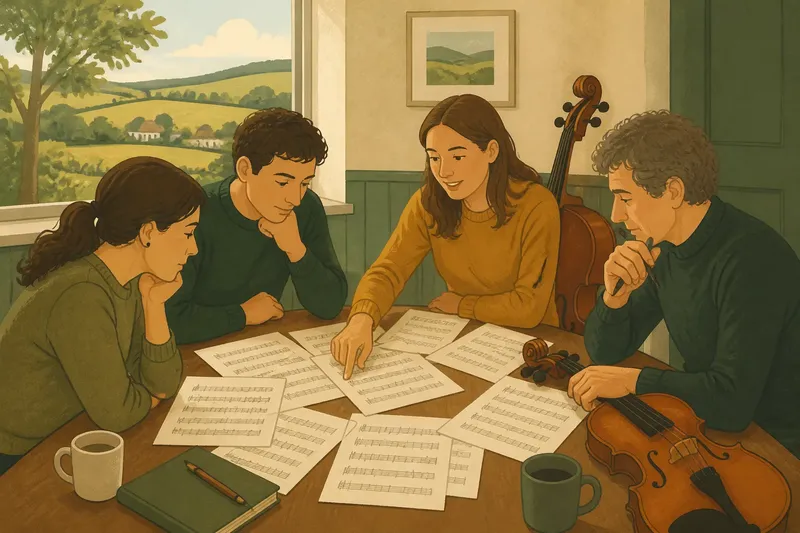
For the hypothetical string group, the players discuss three options at rehearsal: no extra piece, a brief contrasting work, or a reprise of a passage that can stand on its own. They choose the brief work as an option, not a promise. If the performance runs late or the players feel the printed ending has said enough, they can stop there.
That choice also avoids a common mismatch: an encore that weakens the ending. A final piece may have been selected for its sense of closure. Adding a lively miniature immediately afterwards can shift the emotional landing, while repeating a recent favourite may feel natural if the audience is still engaged. The musicians, not the volume of the clapping, are best placed to judge what fits.
Keep any optional piece ready in the same practical way as the main programme: accessible sheet music, settled page turns and a shared cue for starting. This is preparation, not a commitment to perform it.
What should the organiser tell listeners?
The organiser can set expectations without laying down a rule for applause. A note in the printed programme or a sentence in the welcome may say that the scheduled pieces form the complete programme, with any additional music at the performers’ discretion. That is especially helpful if the venue has a tradition of treating prolonged applause as a request.
Avoid language that casts the audience as responsible for securing an encore. “Clap until they come back” can turn a warm response into a test of stamina, and it implies that the performers owe another piece. “Please welcome the musicians back if they choose to offer more” is more accurate, though often no announcement is needed at all.
In the invented situation, the organiser chooses a short welcome that mentions the final work and then leaves the rest to the players. The result is observable in the room: listeners know when the printed programme ends, applause can continue naturally, and no one has to guess whether silence is a failure.
How do applause, an extra piece and a planned ending fit together?
Should the audience keep clapping for an encore?
Clap for as long as you want to express appreciation, then stop when it feels natural. You do not need to prolong applause to make the musicians return.
Can a group give an encore without being asked?
Yes. The performers may choose an extra piece because it suits the programme or the moment. They can also acknowledge applause and leave without adding music.
Is repeating a piece a proper encore?
It can be, especially if a short work bears repeating or listeners have responded strongly to it. An encore does not need to be unfamiliar to count as additional music.
How can a concert end without an encore?
Give the final scheduled work a clear place at the close, then let the musicians acknowledge the audience and leave. A brief thanks or a practical invitation to refreshments can signal what happens next.
What does the imagined evening teach the organisers?
In the hypothetical parish hall, the group finishes its printed programme and receives warm applause. The musicians exchange a quick glance, decide that the optional miniature still suits the evening, and return to play it. After the final bow, they leave; the organiser thanks the audience and opens the adjoining room for tea. The extra piece feels like a gift because it was freely chosen, while the planned ending remains intact.
Now imagine the same concert with a different outcome: the players acknowledge the applause, bow and leave without returning. The organiser gives the same thanks, and the audience moves on to refreshments. The evening is still complete. The difference is not a better or worse response, but a decision made by the performers about what the programme needs.
For a future concert, agree on the final cue, decide whether any optional music is practical, and give the audience a clear route into the close. The encore custom can enrich a village hall evening, but it works best when nobody mistakes it for a requirement.