Why the Room Changes the Sound of a Small Concert
Why the room changes the sound of a small concert: learn what to notice in its shape, surfaces and seating so the music feels clear and close.
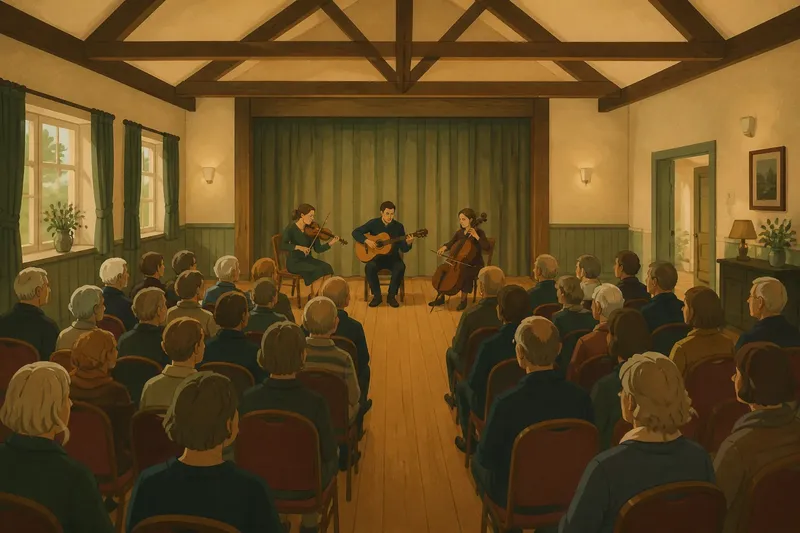
At a village hall concert, the same fiddle can seem warm from a seat near the front and sharper from a chair against the back wall. Why the room changes the sound of a small concert is partly a question of where listeners sit, but also of how the space returns or absorbs the music. A few quiet observations can help you choose a setting and arrange it to suit the performers.
What kind of room are you choosing?
Start with the room’s basic shape. A long, narrow hall tends to put some listeners much farther from the performers than others. A roughly square room makes it easier to gather the audience around the playing area, though seats at the sides may hear the musicians from an angle.
Look at the ceiling as well as the floor plan. A high, hard ceiling can make notes linger; a lower ceiling or soft furnishings may make the space feel more contained. These are useful clues, not firm predictions. A room’s sound also depends on where the performers stand, the instruments they play and how full the audience is.
If the concert is intimate and acoustic, look for a space where listeners can gather near the musicians without crowding them. A huge hall may leave the sound feeling distant; a tiny room may leave little space for comfortable seating.
Which surfaces should you notice?
Hard surfaces such as bare timber, plaster and glass can send sound back into the room. This may give music a lively, ringing quality, but too much lingering sound can make quick passages harder to follow. Carpets, curtains, upholstered chairs and people absorb some of that reflected sound, so a room that feels bright when empty may feel more settled once occupied.
Notice the combination, not just one wall. A room with a hard floor and ceiling but curtains along one side may sound different from one with hard surfaces all around. Doors and windows matter too: a large glass wall can reflect sound towards some seats, while an open doorway may let sound escape into a corridor.
For a quiet acoustic set, a useful first choice is a room with some soft furnishing but not so much that the space feels dead or muffled. If the room is very bare and echoing, consider a smaller audience area rather than trying to compensate with technical adjustments.
Where should the performers and audience sit?
Choose the playing position before arranging every chair. A central spot can help listeners on different sides feel included, but it may put performers in the path of movement or leave some seats behind them. A short end of a rectangular room often gives a clear shared view, provided the audience is not pushed too far back.
Keep the first row close enough for listeners to see faces and hands, but leave room for performers to move and for instruments to be handled comfortably. Avoid placing chairs hard against the rear wall if other positions are available; reflected sound can make those seats feel different from the middle of the room.
Say you are arranging a small acoustic concert in a long village hall with a hard floor and curtains at one end. You could set the performers near the curtained end and bring the chairs into a compact block rather than filling the whole hall. The expected observable result is that listeners sit closer together and nearer the music, with fewer seats left at the distant back of the room.
How should you decide for your situation?
What suits a small acoustic group?
Choose a modest room or a compact seating area, with listeners facing the players and enough space for the sound to reach the back. A few curtains or upholstered chairs can soften a very bright room without making the musicians feel isolated.
What if the room is long and narrow?
Use the short end as the playing area if it gives the audience a clear view, then bring the chairs forward and keep rows shallow. This reduces the sense of distance and makes it easier to keep attention on the musicians.
What if the room is bare and echoing?
Arrange a smaller audience area and avoid spreading chairs across the full floor. If movable soft furnishings are already available, use them to break up a large expanse of bare surface without blocking doors or access routes.
What if listeners need clear sightlines?
Prioritise a shallow arrangement in which people can see the performers without leaning around one another. A slight curve or a few short rows may work better than a deep block, especially when the musicians play seated.
How can you observe the room before the concert?
Walk from the playing position to several likely seats and listen while someone speaks at an ordinary conversational level. Notice whether a voice seems clear, blurred or unusually loud in one spot. This is a simple way to compare places, not a technical assessment of sound.
Then stand where the audience will sit and check what is visible: faces, hands, music stands and any doorway that might draw attention. Look for obvious distractions such as a rattling window, a noisy heater or a bright patch of light behind the performers. If practical, have a few chairs in place before making the final layout decision.
- Can listeners see the performers from the planned seats?
- Does the room feel especially bright or echoing when you speak?
- Are any seats much farther from the playing area than the rest?
- Will doors, windows or equipment interrupt the listening space?
- Can the audience sit close without obstructing performers or access?
For any changes involving building fittings or equipment, follow the relevant instructions and local requirements; keep the choice of seating and room layout within what the venue permits.
What should you adjust when the room feels wrong?
If the music seems distant, bring listeners closer or reduce the unused space between the playing area and the audience. If notes seem to linger, try a more compact layout and use available soft furnishings. If people at the sides struggle to see, angle the chairs slightly towards the performers instead of making the rows deeper.
Change one thing at a time, then listen again from the seats that matter most. Small adjustments to room shape, surfaces and audience arrangement can alter what listeners notice, even when the performers and programme stay the same. For a small concert, the best setting is often the one that brings people together without making the music fight the room.