When Parlour Music Moved into Public Concert Rooms
Learn how parlour music and public concerts developed in Britain, and use their different customs to shape a welcoming rural concert today.
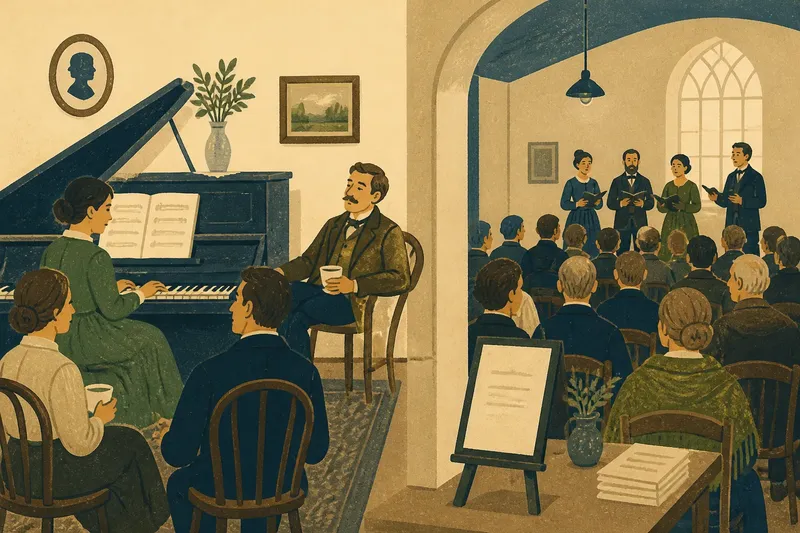
A piano stands open in a family parlour, with chairs drawn close and conversation possible between pieces. In a public concert room, listeners gather for an announced performance and share their attention. The change from parlour music to public concerts happened gradually, and its timing varied by place, musical life and access to venues.
When did parlour music move into public concert rooms?
There was no single date when parlour music gave way to public concerts. In Britain, public concert life developed over centuries, with purpose-built or adapted rooms becoming part of musical life in towns and cities well before the nineteenth century. During the eighteenth and nineteenth centuries, commercial concerts and public venues became more established, while music-making in homes continued alongside them.
The story differs from one locality to another. A large town with theatres, assembly rooms or concert halls offered different opportunities from a small rural community, where music might be heard at home, in an inn, a church or a hired room. Public access also depended on local arrangements and means; a public event was not automatically open or affordable to everyone.
So the change was not a clean move from one kind of room to another. Private music-making remained important even as organised public performances became a familiar option. For a rural organiser, the more useful question is what kind of gathering the room and programme invite now.
What changed when music left the parlour?
In a private room, music could sit among ordinary routines. A relative might play while guests visited; a singer could join in; listeners could respond without waiting for a formal pause. The gathering was shaped by relationships as much as by the music.
A public concert made a different promise. People could attend as listeners without being hosts, guests or performers, though the character of each event depended on its place and audience. An announced programme and a settled start helped distinguish a performance from everyday sociability.
For a rural organiser, the useful distinction is not “informal” versus “proper”. Ask whether the room invites conversation, close participation or sustained attention. Decide what the evening asks of its audience before arranging chairs or writing the welcome.
Who could attend a public concert?
A private gathering depended on access to a household and its circle. A public concert offered another route: people could come for the performance rather than through a personal invitation from the host. But “public” did not mean that every person had equal access. Location, admission arrangements, social conventions and the resources needed to attend all shaped who was present.
In a rural setting, a concert can still bring neighbours together beyond one household’s circle. A plain welcome helps newcomers understand the occasion. Name the performers, explain the shape of the evening and say whether conversation or refreshments are planned.
How can a rural concert mark the occasion?
A parlour gathering could begin when the company was ready. A public concert benefits from a recognisable frame: an invitation, an arrival, a beginning, a sequence of music and a closing moment. These cues tell listeners when to settle and when the shared attention can end.
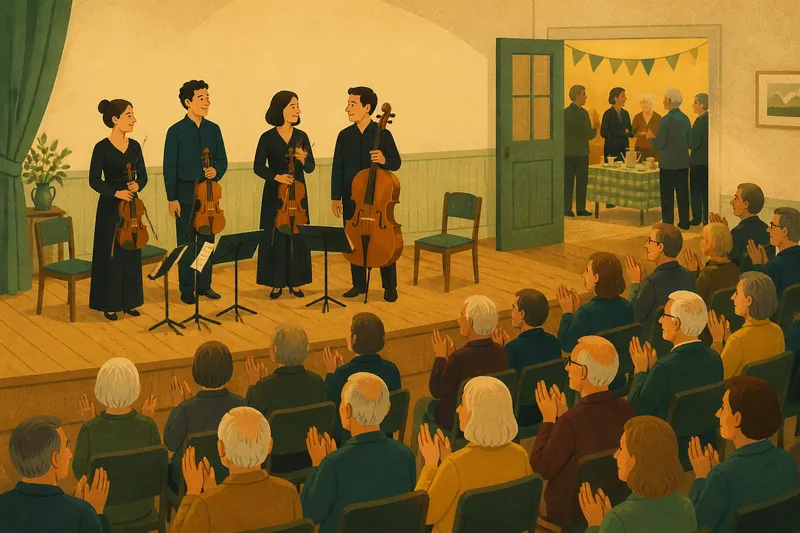
The frame need not be grand. Put a clear sign at the entrance, offer a spoken welcome and display a programme where people can read it. If refreshments follow, say so plainly; listeners can then understand that the music has ended even though the gathering continues.
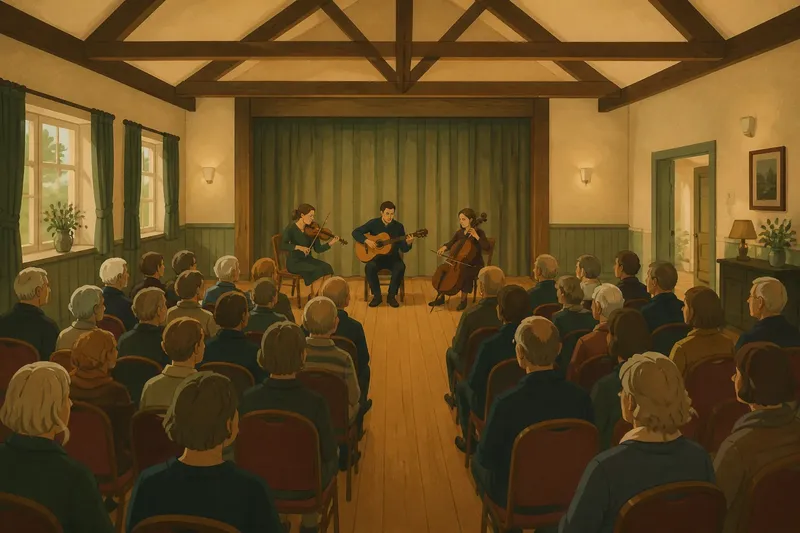
Imagine a village group planning an evening of local singers in a room usually used for meetings. They put a sign at the entrance, greet arrivals, announce the performers and invite everyone to stay for tea after the final song. The expected result is a clear musical beginning and a hospitable ending, without pretending the hall is a formal theatre.
What can a rural concert borrow from parlour music?
A public concert can keep the closeness of private music-making. A performer might speak briefly to listeners, explain why a piece belongs in the programme or invite a communal song where that suits the occasion. The point is not to interrupt every silence; it is to help listeners feel present rather than merely seated.
Choose participation deliberately. If the event is built around attentive listening, keep announcements concise and leave space between pieces. If the tradition includes singing together, provide legible words and make clear when listeners are welcome to join. A surprise invitation can unsettle people who expected to listen quietly.
Think of the public room as a gathering with a host, not just a platform with performers. A named welcome and a clear sign-off can preserve warmth while respecting the concentration a concert asks for.
What questions help define the tradition?
Does a public concert have to feel formal?
No. Agree when the music begins and what listeners are invited to do, then explain it in a relaxed voice. A warm greeting can sit comfortably beside attentive listening.
Can listeners join in at a concert?
Yes, if participation belongs to the programme and is introduced clearly. Tell people whether a song is for listening, joining in or responding at a particular point.
What makes a village hall feel like a concert room?
A visible performance area, a clear welcome and an agreed start help establish the occasion. The room needs useful cues, not elaborate staging.
How can a concert welcome first-time listeners?
Offer practical information at the entrance, including where to sit and what will happen after the music. A short introduction can explain local customs without making newcomers feel they should already know them.
How can old and new customs sit together?
Parlour music and public concerts represent different ways of gathering, not a simple story in which one replaces the other. A rural concert can draw on both: the public room offers a shared occasion, while the spirit of a parlour gathering keeps performers and neighbours in human contact.
Make the invitation clear in small decisions. Say whether listeners are expected to remain seated, whether conversation belongs at an interval and whether the evening ends with music or moves into refreshments. These signals let a community shape its own custom without assuming every concert must follow the same pattern.
When planning a rural concert, explain what listeners can expect before they arrive. A clear welcome, a well-marked start and an honest account of participation help the room feel open to both regulars and first-time listeners.